

Atlantic City Casino Revenue Trends and iGaming Growth for March

Atlantic City Casino Revenue Trends and iGaming Growth for March

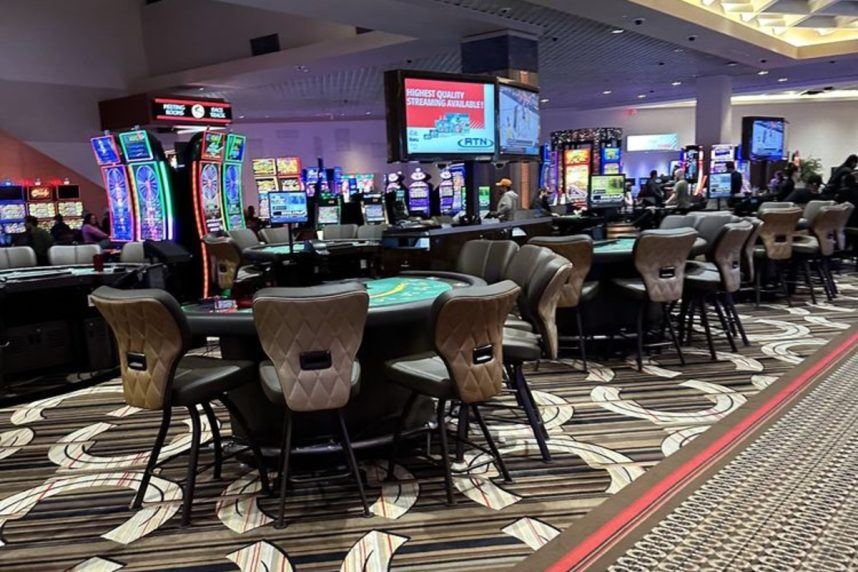
During March, Atlantic City casinos saw a decline in revenue from in-person gamblers, with a reported downturn of 3.7% compared to the previous year. This marks the second straight month where physical play in the Atlantic City region has dropped, correlating with a broader trend in iGaming growth observed over the first quarter of 2025.

iGaming growth
Image by 2780243 from Pixabay

Revenue Breakdown

The New Jersey Division of Gaming Enforcement (DGE) announced that the total winnings for the nine casinos reached $230.9 million last month, reflecting an almost $8.9 million decline from March 2024. Disturbingly, table games led this revenue decrease, plummeting nearly 15% to $57.3 million, while retail slot machines experienced a modest increase of 0.5%, totaling $173.6 million.

iGaming Growth Continues

In stark contrast to the decline in traditional casino revenue, iGaming has demonstrated remarkable growth. With March’s iGaming revenue surpassing $200 million for the seventh consecutive month, online gaming platforms have consistently outperformed Atlantic City in terms of total gross gaming revenue (GGR). The iGaming sector raked in a new high of nearly $243.9 million last month, indicating a staggering 24% increase year-over-year.

The breakdown for online gaming included:

  • Online Slots and Interactive Tables: $241.3 million
  • Internet Poker: $2.6 million

Meanwhile, sports betting revenue in New Jersey was recorded at $71.3 million, reflecting a notable decrease of 20.5% from the previous March.

Overall Gaming Revenue Snapshot

As noted by James Plousis, chair of the New Jersey Casino Control Commission, although March’s figures show a year-over-year decline, it remains the second best month for in-person GGR in twelve years. Combined gaming losses in the state reached $546.12 million, highlighting a 3.7% increase in profit margin for casinos.

The overall gaming revenue for New Jersey in the first quarter surpassed $1.58 billion, the highest quarterly figure in over a decade. The iGaming sector is largely credited, with a year-to-date increase of 20% totaling $673.3 million.

Job Opportunities in Atlantic City

As the summertime approaches, Atlantic City’s casinos are ramping up hiring efforts, with over 1,700 positions available. Interested candidates can participate in the Casino Control Commission’s annual Casino Career Fair on April 24, aimed at matching potential employees with hiring representatives from across the region.

Conclusion

While Atlantic City’s in-person gaming struggles through revenue declines, the growth of iGaming signifies a shifting landscape in the gambling industry. As casinos prepare for the busy summer season, job opportunities continue to emerge in response to this evolving market demand.


FanDuel Retains Lead in Sports Betting Rankings

FanDuel Retains Lead in Sports Betting Rankings

In March, FanDuel not only upheld its status as the leading sports betting and iGaming brand but also showcased impressive performance metrics that highlight its market dominance. This marks the sixth consecutive month that FanDuel, a division of Flutter Entertainment (NYSE: FLUT), has claimed this top spot.

Sports betting
Image by eGamingImagery from Pixabay

To assess the competitive landscape, Jefferies, a renowned financial services firm, utilized data from various platforms including Google Trends, ListenFirst, and Sensor Tower. The findings were clear: FanDuel led the pack in aggregate measurements, while its competitors also indicated significant movement in brand awareness and recognition.

Top Competitors in the Industry

Following FanDuel, DraftKings (NASDAQ: DKNG) claimed the second position, with BetMGM securing third place. The remaining top 10 sports betting brands are listed as follows:

  • 4. bet365
  • 5. ESPN Bet (Penn Entertainment)
  • 6. BetRivers (Rush Street Interactive)
  • 7. Bally’s
  • 8. Hard Rock Casino
  • 9. Fanatics Sportsbook
  • 10. Caesars Sportsbook & Casino

Notably, WynnBET has exited the iGaming and online sports wagering market, influencing this competitive mix.

Rush Street Interactive on the Rise

While the market remains largely dominated by the FanDuel and DraftKings duopoly, companies like Rush Street Interactive (RSI) and Caesars Sports are gaining ground. Analyst David Katz from Jefferies highlighted that despite its smaller size, RSI’s BetRivers has made impressive strides, ranking well in Google Search and Web Traffic metrics.

BetRivers is operational in several states including Colorado, New Jersey, and Virginia, although it trails behind the extensive availability of its competitors.

Market Insights

The growth of RSI and Caesars Sports indicates that smaller companies can carve out market share through innovative marketing and brand recognition, despite the overwhelming presence of larger brands. Hard Rock Digital also exemplifies this approach, with its estimated valuation reaching $8 billion due to its stronghold in Florida’s sports betting scene.

As the competitive landscape of sports betting evolves, the performance and brand strategies employed by these companies will be critical in determining future rankings and market opportunities.

Conclusion

FanDuel continues to set the pace in the sports betting industry, supported by its substantial brand awareness and market presence. Smaller operators like Rush Street Interactive are emerging as significant challengers, demonstrating that innovation and brand identity can enable competitive growth even in a marketplace dominated by giants.

Sportsbook Performance Drives Positive iGaming Growth Snapshot for Q1 2025

Sportsbook Market Expansion: Rivalry Unveils Positive Q1 2025 KPI Snapshot

Rivalry, a prominent Toronto-based sportsbook and iGaming operator, recently released its preliminary key performance indicators (KPIs) for the first quarter of 2025, which ended on March 31. This snapshot demonstrates remarkable improvement in revenue per user, signaling strong iGaming growth as the company embarks on a new strategic direction.

iGaming growth
Image by ignartonosbg from Pixabay

Strategic Changes Leading to Positive Growth

In preparation for 2025, Rivalry executed a substantial overhaul of its products, branding, and marketing efforts, focusing on a crypto-first approach while emphasizing high-value players. CEO Steven Salz noted that the updated registration process and enhanced sportsbook offerings have positively impacted user engagement and profitability.

Financial Growth Indicators

In Q1 2025, Rivalry reported a significant increase of 400% in net revenue generated per user compared to previous averages. Other noteworthy developments include:

  • Deposits: A monthly increase of 36% in February and 12% in March.
  • Average Monthly Deposits: Surpassing prior periods by an impressive 175%.
  • Monthly Deposit Frequency: A 115% increase in comparison to averages prior to October 2024.
  • Monthly Active Users: An increase of 9% in March alone.

Rivalry’s dedication to a proficient model resulted in a net revenue margin of 2.3% during Q1 2025, demonstrating resilience in a period of transition.

Conclusion

In summary, Rivalry’s Q1 2025 KPI snapshot reveals a promising trajectory for the company as it adapts to evolving market demands. The strategic initiatives aimed at optimizing user experience and profitability signal a bright future for the brand in the iGaming and sportsbook landscape.

From El Salvador’s Prisons to the High Stakes of Sports Betting: The Uncertain Future of Kilmar Abrego Garcia | 10BET

From Legal Uncertainty to High Stakes: Why Predicting the Future of Kilmar Abrego Garcia is Like Sports Betting

The situation of Kilmar Abrego Garcia, an El Salvadorian citizen, remains grim as he fights for his release from an immigration prison where he was mistakenly deported by the United States government. The uncertainty surrounding his legal battle has become so high-profile that even analysts are looking at the odds of his return. Contrary to initial expectations, the path towards his freedom appears increasingly bleak, a sentiment reflected in the shifting trends found in sports betting markets that have begun to weigh in on the unpredictable nature of his fate.

Immigration prison
Image by manfredrichter from Pixabay

Background on Kilmar Abrego Garcia

Garcia immigrated illegally to the United States in 2011 at the age of 16 to evade serious gang threats against him and his family. For over a decade, he established a life in Maryland, working in construction, marrying, and raising three children, two of whom have disabilities.

Despite being unjustly labeled an MS-13 gang member by local police, Garcia has never faced criminal charges. His asylum request was denied, yet a federal immigration judge recognized the risks he faced upon returning to El Salvador, granting him “withholding of removal” status.

Current Circumstances

Even as he faces dire conditions in prison, bettors place Garcia’s odds of returning to the U.S. at a mere 8% within the next month and 29% by the end of July.

  • Regulatory Challenges: Legitimate sportsbooks are not taking bets on his situation due to legal ramifications, but unregulated markets are offering wagers.
  • Government Inaction: The Trump administration, despite court orders, has shown reluctance to facilitate Garcia’s return.

Political Ramifications

Both the Supreme Court and lower federal courts have urged prompt actions to arrange Garcia’s safe return to the U.S. However, political dynamics have complicated the situation. During a recent meeting with El Salvador’s President Nayib Bukele, Trump remarked that the decision to return Garcia relies on Bukele’s approval.

“The question is preposterous: how can I smuggle a terrorist into the United States?” said Bukele, highlighting the complexities of Garcia’s predicament.

Conclusion

As Kilmar Abrego Garcia’s future remains uncertain, the ongoing legal and political challenges raise concerns about his well-being and rights. The complications surrounding his case highlight larger issues within the immigration system that require urgent attention and resolution.

North Carolina Sports Betting Tax Proposal Could Significantly Increase Sports Betting Finance

North Carolina Sports Betting Tax Proposal Could Significantly Increase Sports Betting Finance

North Carolina’s sports betting landscape is poised for potential changes that could impact how much sportsbooks will contribute to state revenue, which is a critical component of sports betting finance. Senate Republicans in North Carolina have announced plans to increase the current tax rate on online sports betting from 18% to a remarkable 36%.

Sports betting finance
Image by NIDEO_NICS from Pixabay

Current Taxation Structure

Right now, the eight licensed online sportsbook operators in North Carolina are subject to an 18% tax on their gross winnings. This tax revenue is vital as it is intended to support the state’s education system, including colleges and universities within the University of North Carolina (UNC) System.

Impact of the Proposed Increase

The proposed adjustment, if implemented, could significantly increase the revenue generated from online sports betting operations. In the fiscal year 2025, sportsbooks in North Carolina accepted over $5 billion in bets, showcasing the popularity of legal sports betting. The potential boost in tax revenue could allow for:

  • Enhanced Funding for Colleges: The additional revenue from the increased tax rate would directly benefit athletic programs across the UNC System.
  • Support for Hurricane Helene Victims: The funds could also help replenish state reserves that dipped significantly due to natural disasters.
  • Teacher and State Worker Pay Increases: This tax revenue would potentially facilitate modest pay raises for educators and state employees.

Currently, the expected state share from the existing tax structure is around $85 million. If the tax doubles, North Carolina could see that figure surge to $171 million.

California vs. North Carolina

North Carolina’s current tax rate is competitive when compared to neighboring states. For instance:

  • Virginia: 15%
  • Tennessee: approximately 20% (includes a flat fee of $750,000 for licensing)
  • Additional States: New Hampshire, New York, and Rhode Island impose the highest rates at 51%

Despite potential concerns about further taxation, North Carolina’s lawmakers argue that this increase is essential for funding key aspects of public education and community support.

Conclusion

In summary, the proposed doubling of the sports betting tax in North Carolina could lead to substantially increased funds to support educational initiatives and community services. As sports betting continues to resonate with residents, the impact of such a tax increase may prove beneficial for both the state and its citizens.

Tribal Gaming Expansion: Shoshone-Paiute and Coeur d’Alene Development Projects in Idaho

Shoshone-Paiute and Coeur d’Alene Partner to Expand Tribal Gaming Through Major New Casino Development in Idaho

The Shoshone-Paiute Tribe is moving closer to transforming the regional economy through the strategic expansion of tribal gaming in Idaho’s Treasure Valley. Recognized as the state’s only federally acknowledged non-gaming tribe, the community is taking a monumental step toward realizing its long-desired goal of establishing a casino near Boise as part of its broader development initiatives. To facilitate this entry into the tribal gaming sector, the tribe recently acquired a substantial 557 acres of land straddling Elmore and Ada counties, positioned conveniently between Mountain Home and Boise to serve as the foundation for future gaming and hospitality ventures.

Tribal development
Image by Pexels from Pixabay

This ambitious project has led to a strategic partnership with the Coeur d’Alene Tribe, known for operating the Coeur d’Alene Casino Resort Hotel. This collaboration not only involves an essential investment from the Coeur d’Alene Tribe but also ensures their management expertise in handling the operations of the prospective casino.

The Need for Development

The reservation of the Shoshone-Paiute Tribes is situated in a remote part of Idaho, bordering Nevada, where both unemployment and suicide rates are alarmingly high. The tribe is optimistic that establishing a casino will generate vital revenue and bring much-needed infrastructure improvements to the community. As stated by Brian Mason, the Chairman of the Sho-Pai, “I dream of a future where our members have the resources, education, healthcare, and employment opportunities they need to care for their families and preserve our way of life.”

Approval Requirements

Since the proposed casino will be established off the reservation, it requires federal approval, as well as clearance from local county officials and Idaho’s Governor, Brad Little (R). Successfully navigating this regulatory environment is crucial for the project to move forward.

The Positive Impact on Community

  • Poverty Alleviation: The casino is anticipated to create jobs that can significantly reduce the high poverty rates affecting tribal members.
  • Emergency Response Funding: The generated revenue will enable improved funding for emergency services on their reservation, vital in a region where, due to its remoteness, 911 response times can stretch up to two hours.

“Today, we have no meaningful economic opportunities, and our community is facing some heavy challenges because of it,” Mason continued. “Tribal gaming will allow us to make these dreams into a reality.”

Competition for Casino Development in the Area

The Sho-Pai Tribe is not alone in its aspirations for economic development through gaming in the Treasure Valley. The Shoshone-Bannock Tribes (Sho-Ban) have also expressed intentions to build a competitive $311 million casino in Mountain Home, approximately 45 minutes from Boise. They have already acquired land and are in the process of applying for federal trust status for their casino project.

Brian Mason has previously articulated his opposition to the Sho-Ban project, emphasizing the challenges faced by the Sho-Pai Tribe without any existing casinos, whereas the Sho-Ban already has three operational facilities.

Conclusion

The partnership between the Shoshone-Paiute Tribe and the Coeur d’Alene Tribe marks an important milestone in the attempt to enhance economic stability and infrastructure in the tribal community. This project aims not only to provide entertainment but also to foster significant improvements in overall living conditions for the Shoshone-Paiute members. As both tribes continue to navigate the legal requirements for casino development, their commitment to creating a flourishing future for their members remains a top priority.

Impact of Labor Disputes on Casino Operations: Indianapolis Dealer Strike | 10BET

Impact of the Horseshoe Indianapolis Labor Strike on Essential Casino Operations

Key Points: The recent labor strike has introduced several critical factors that must be considered in our analysis, particularly regarding how such disruptions can destabilize the efficiency and profitability of daily casino operations.

  • Horseshoe Indianapolis dealers are on strike seeking union representation.
  • The strike follows Caesars Entertainment’s refusal to assist in a union election process.

Table game dealers at Horseshoe Indianapolis in Shelbyville, Indiana, have taken a bold stand by walking off the job. This strike, initiated by around 200 table game dealers and dual-rate supervisors, arises from a demand for union recognition under Teamsters Local 135. Following Caesars Entertainment’s denial to permit an independent process for determining union support, the striking dealers are now picketing with signs to bring public attention to their cause.

Casino strike
Image by tourque from Pixabay

“Horseshoe dealers and dual rates want and deserve the strong representation that Local 135 can provide them. We will not let the casino’s management stand in their way,” voiced Dustin Roach, president of Local 135. As the union aims to assist the striking workers, they stress the necessity for strong representation in negotiations regarding wages and working conditions.

Impact of Government Shutdown

The situation is exacerbated by the ongoing government shutdown, which has hindered the National Labor Relations Board’s (NLRB) functionality. Typically, the NLRB is responsible for overseeing voting processes for unionization but is currently operating at minimal capacity. The board’s inability to conduct the necessary vote has prompted the Teamsters to propose introducing a mutually acceptable, independent auditor to facilitate the count of secret ballots.

Despite the stonewalling from Caesars, union leaders maintain that the delay will ultimately be futile. Tommy Blitsch, director of the Teamsters Convention, Trade Show, and Casino Division, stated, “Horseshoe is only delaying the inevitable.”

Horseshoe Indianapolis Operations

Even in the wake of these striking actions, Horseshoe Indianapolis remains operational. The casino still accommodates patrons, with dealer games continuing to run. The latest data shows that Horseshoe Indianapolis generated a gross gaming revenue of $336 million in 2024, putting it second among the state’s 13 casinos. Indiana’s tax scheme means that for this revenue, the casino must contribute 35% — approximately $117.6 million — to state taxes.

In addition to table games, Horseshoe Indianapolis hosts 1,500 slot machines, a racebook, and a Caesars Sportsbook. The venue also enjoyed a 123-day live racing season in 2025.

The Bigger Picture

This strike at Horseshoe Indianapolis mirrors broader tensions faced by casino workers across various locations in the U.S. As labour movements continue to gain momentum, the outcome at Horseshoe could set a precedent for future union negotiations within the hospitality and gaming industry.

Summary: The ongoing strike at Horseshoe Indianapolis reflects the deep-seated struggles within the gaming labour market as dealers advocate for union representation amidst management’s resistance. Highlighting the critical role of the NLRB and wider labour movements, this situation illustrates the urgent need for effective negotiation of working conditions in the casino industry.

DraftKings and FanDuel Sports Betting Hold Rates in Focus Ahead of Q3 Earnings

Sports Betting: DraftKings, FanDuel Q4 Hold Rates in Focus Ahead of Q3 Earnings

As the NFL season progresses, sports betting operators are bracing for potential challenges in their earnings reports. DraftKings (NASDAQ: DKNG) and FanDuel owner Flutter Entertainment (NYSE: FLUT) are under scrutiny as analysts assess their Q4 hold rates and potential impacts on their market forecasts.

Key Insights

  • Operators struggling to capture maximum benefits of the NFL season: The operators are anxiously awaiting to see if they can take full advantage of the NFL’s popularity.
  • If Q4 holds disappointment, 2026 consensus estimates could be lowered: Analysts were quick to point out that a slow Q4 could lead to a recalibration of future earnings estimates.
  • Quarter-to-date hold in New York is 8.6%: This figure falls below the average during the previous three quarters.

With the NFL season starting off slowly for some key operators, analysts are increasingly focused on the hold rates for the fourth quarter. In a recent client note, Macquarie analyst Chad Beynon referred to the ability of online betting companies to take full advantage of the NFL season as, “the million-dollar question”.

sports betting
Image by caltatum from Pixabay

Last year, a number of customer-friendly NFL outcomes adversely affected the earnings of DraftKings and Flutter, and analysts fear this may happen again this year. Beynon noted that any disappointing hold in Q4 could lead to a re-evaluation of future hold expectations and a possible downgrade of estimates for 2026.

“If 4Q25 is another year of disappointing NFL hold, we anticipate a recalibration of future expectations,” Beynon commented.

Ambitious Hold Estimates

September typically accounts for around half of the total betting handles for operators in the third quarter, but the recent performance data indicates that DraftKings and Flutter’s earnings before interest, taxes, depreciation, and amortization (EBITDA) could be negatively impacted.

Beynon points out that both companies previously had structural hold estimates of 11% and 13% for Q4, but the trend over the last two years has shown a decline of about 200 basis points in their ability to meet these targets.

Expectations for DraftKings and Flutter’s Q4 EBITDA presently sit at $396 million and $570 million, representing significant year-over-year increases. However, these projections are built on hold rates of approximately 10% and 11.2%, potentially straining the capacity to meet historical averages where net hold rates averaged around 5.7% and 6.9%, respectively.

In the early stages of the current quarter, the hold in New York, the largest sports betting market in the United States, has averaged 8.6%, a decline from results in previous quarters.

Market Pain Could Mean Opportunity

Recent trends in prediction markets, such as Kalshi, indicate challenges for sports wagering stocks, with DraftKings and Flutter leading the declines. Analysts at the Global Gaming Expo (G2E) in Las Vegas, however, suggest that the selloff might be overblown, indicating potential opportunities for investors.

Beynon emphasizes that robust NFL hold rates and continued growth in iCasino could bode well for both companies as they navigate these turbulent waters.

“We think strong September online sports betting volumes and positive insights from third-quarter earnings calls could catalyse share prices,” he added, suggesting that both DraftKings and Flutter shares could rise significantly by year-end.

Conclusion

As DraftKings and FanDuel gear up for their Q3 earnings, challenges loom large over their potential to capitalise on the NFL season. With analysts keenly watching the hold rates and betting market dynamics, it will be pivotal for these operators to adjust their strategies if they hope to exceed market expectations. Investors will be keeping a close eye on how these factors unfold in the coming months.

Uploaded via WPAPI

How Government Shutdowns Impact Casino Operations and Labor Unionization Plans | 10BET

Government Shutdown Disrupts Casino Operations and Labor Unionization Plans

The ongoing federal government shutdown is significantly complicating the complex landscape of casino operations at Horseshoe Indianapolis, specifically regarding the planned unionization of its labor force. As shifts in regulatory stability impact the broader efficiency of casino operations, concerns are mounting among the workforce, who are striving to secure their rights and improve working conditions amidst the political uncertainty.

What’s Happening?

  • The horseshoe Indianapolis workers are seeking to form a union through Teamsters Local 135.
  • Caesars Entertainment has reportedly declined to allow a neutral third-party audit for the union vote.

More than 200 employees from Horseshoe Indianapolis in Shelbyville, Indiana, are attempting to unionize with the Teamsters. This union currently represents approximately 12,000 workers across various industries, including aviation, warehousing, and casino operations.

The Role of the NLRB

The team of table game croupiers oversees 65 games at the casino owned by Caesars and was poised to vote on joining the Teamsters. However, the government’s shutdown halted funding for the National Labor Relations Board (NLRB), which is essential for organizing such a vote. The NLRB’s closure means that union certification procedures are effectively put on hold.

What Are the Implications?

The Teamsters proposed an alternative voting arrangement whereby a neutral third-party would oversee and count the ballots instead of the NLRB. Unfortunately, the casino management has not responded to this proposal, prompting concerns over potential union-busting tactics.

Potential Strike Action

With the ongoing lack of communication from Caesars, Teamsters Local 135 President Dustin Roach has indicated that employees may engage in a walkout. If the management continues to disregard their requests, this strike could commence to pressurize the casino for compliance with the requests for an independent vote count.

The Impact of the Government Shutdown

The government shutdown began on October 1 after Congress failed to reach an agreement on budget allocations, resulting in around 750,000 federal employees being furloughed without pay. Essential services remain operational, but many regulatory bodies, including the NLRB, are closed, stalling crucial labor relations processes.

What Does This Mean for Workers?

  • Workers are concerned about their rights and representation.
  • There’s a need for clear communication and negotiation between the casino management and employees.
  • Potential strike action highlights the critical role of unions in advocating for workers’ rights.

Looking Ahead

As the situation progresses, it remains crucial to monitor developments regarding the federal budget discussions and the reopening of the NLRB, as these factors directly impact the casino workers’ ability to unionize. The importance of organized labor in protecting employee rights cannot be understated, especially in times of financial and operational instability.

Conclusion

The unionization efforts at Horseshoe Indianapolis serve as a reminder of the ongoing challenges faced by workers in the casino industry, particularly against the backdrop of government inaction. As this situation evolves, the solidarity displayed by the workers highlights their commitment to securing fair treatment in their workplace.

government shutdown casino union strike
Vacant table games inside Horseshoe Indianapolis are pictured in May 2023. Casino table game dealers are hoping to unionize amid the federal shutdown.

Will Maryland Legalize Online Casinos? New Poll Shows Residents Are Skeptical | 10BET

The Future of Online Casinos in Maryland: Is Online Casino Gambling Coming?

  • A poll finds that voters in Maryland do not want online casinos
  • State lawmakers have considered iGaming legislation in recent sessions

As the debate surrounding the legalization of online casinos intensifies, Maryland lawmakers have discussed various gambling law legislations in recent sessions, yet no formal proposal has been put forth for a vote in the General Assembly. This legislative hesitation aligns with a recent poll conducted by Lake Research Partners in Washington, DC, and commissioned by the National Association Against iGaming (NAAIG), which indicates that residents hope the current restrictions on online casinos remain unchanged through 2026.

State politics
Image by rob-armbruster from Pixabay

A survey of 650 registered voters revealed that 71% of likely voters are opposed to legalising iGaming. Among those opposed, 64% expressed being “strongly opposed” to the expansion of online casinos.

“Opposition to the legalization of iGaming in Maryland is thorough and consistent across all demographics,” stated the researchers. “iGaming starts out unfavourable and becomes stronger as voters learn more about it.”

Currently, legal iGaming is limited to the states of Connecticut, Delaware, Michigan, New Jersey, Pennsylvania, Rhode Island, and West Virginia. Despite this, many states continue to see the operation of unregulated online sweepstakes casinos.

Maryland: A Prime Target for iGaming Advocates

Advocates for iGaming view Maryland as a prime candidate for policy changes. With a median household income around $100K, Maryland ranks third in the U.S., just behind Massachusetts and New Jersey.

The Maryland General Assembly considered iGaming legislation in both 2024 and 2025. Delegate Vanessa Atterbeary (D-Howard) was the leading force behind House Bill 17, which aimed to permit the state’s six casinos and various online sportsbooks to seek internet casino licenses. Each license would have incurred a cost of $1 million every five years, with a proposed tax rate of 55% on gross revenue designated for educational funding.

Despite these efforts, Atterbeary’s bill saw little progress in 2025, failing to receive a committee vote before it ultimately died in the Ways and Means Committee, which she chairs.

Opposition Against iGaming

Major opposition to iGaming in Maryland comes from entities like The Cordish Companies, which operates the Live! Casino & Hotel Maryland located in Anne Arundel County. Cordish is a founding member of NAAIG, pushing against iGaming expansion.

Cordish’s anti-iGaming stance is further supported by Ocean Downs Casino in Berlin, a racetrack casino owned by Churchill Downs, Inc., which is also a NAAIG member. Even though NAAIG members are against iGaming, both Cordish and Churchill function online casinos in states where they are legal, like Pennsylvania. Live! has partnerships with FanDuel, whereas Cordish has teamed up with bet365.

Maryland’s physical casinos have been experiencing declines recently. For four consecutive months, gross gaming revenue has dropped compared to the same months in 2024. From July 1 to September 30 in the 2026 fiscal year, Maryland casino revenue decreased by 3.1% compared to the previous year, with these establishments primarily supporting the Education Trust Fund aimed at enhancing public education and school infrastructure.

Key Takeaways

  • A significant 71% of Maryland voters oppose online casinos.
  • Recent legislation proposals for online gaming in Maryland have not made significant progress.
  • Concerns regarding the impact of iGaming on physical casinos continue to grow.
  • Legislation for online casinos could end up taxing gaming operators with a substantial portion allocated to education.

This poll reflects Maryland’s strong inclination to maintain a traditional approach to gambling, favouring physical locations over digital expansions. As a vibrant gaming state, Maryland’s future legislative actions surrounding iGaming will be closely watched as advocates and opponents alike strategize for the upcoming legislative sessions.